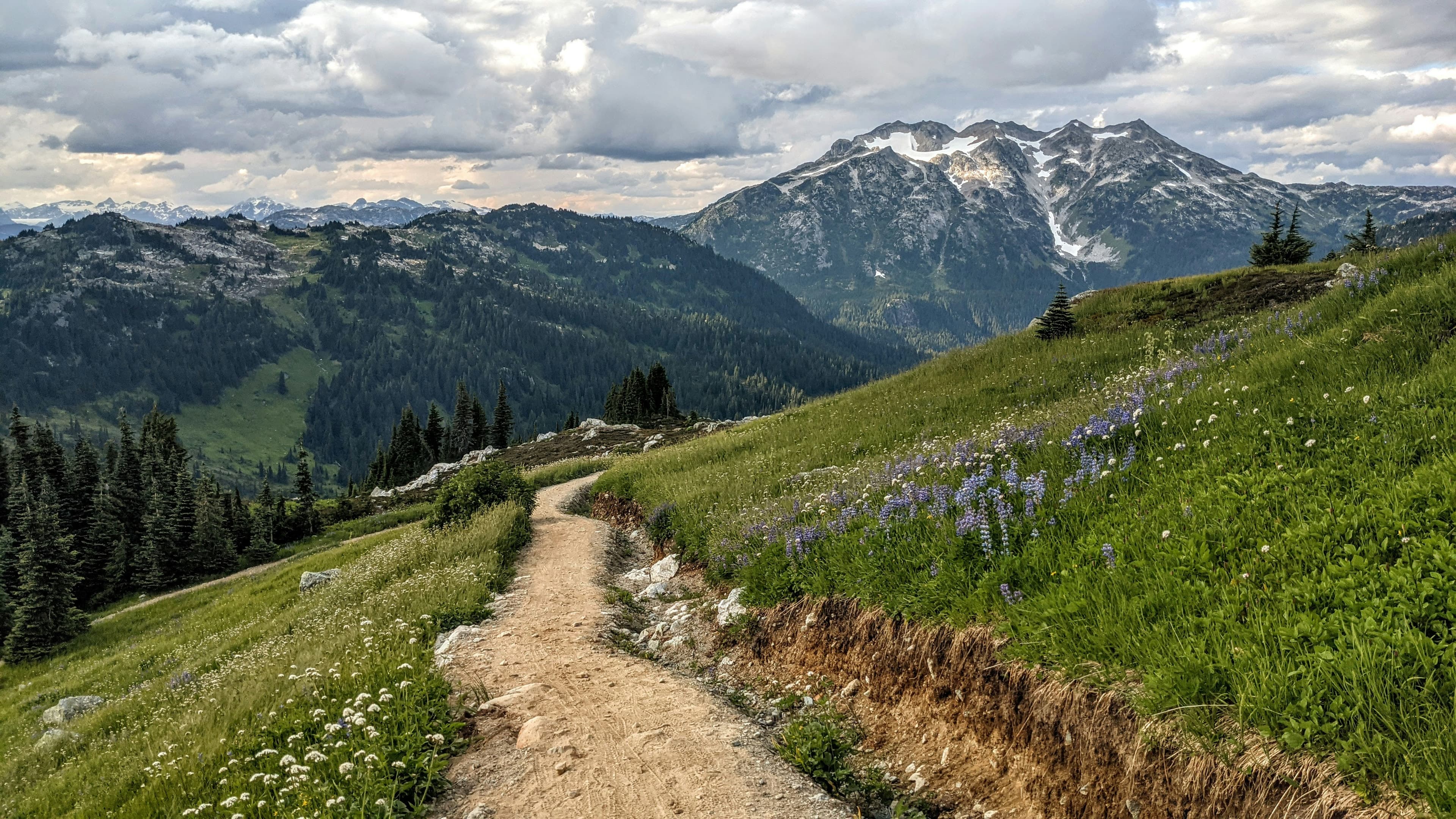
Everest Base Camp Trek
Khumbu, Sagarmatha National Park · Nepal
The world's most-walked high-altitude trek — 65 km from Lukla up the Khumbu valley to the foot of Everest at 5,364 m, traditionally finished in 12–14 days.
- Distance
- 130 km
- Elevation gain
- 5,500 m
- Duration
- 12 days
- Type
- Out & back
What you’re getting into
The Everest Base Camp Trek is a roughly 130 km round-trip walk through Nepal's Khumbu region to the foot of Mount Everest, climbing from Lukla (2,860 m) to Base Camp at 5,364 m over 12 to 14 days. It's the most popular high-altitude trek in the world, accessible to fit hikers with no climbing experience but demanding because of the altitude, the cumulative elevation gain across multiple deep valleys, and the cold thin air above 4,000 m.
The standard route starts with a flight into Lukla's Tenzing-Hillary Airport — a short, dramatic landing on a sloped runway carved out of the hillside. From there the trail follows the Dudh Koshi river up through pine and rhododendron forests to Namche Bazaar, the bustling Sherpa capital and unofficial crossroads of the Khumbu. Above Namche the trees thin out at Tengboche, where the famous monastery looks straight at Ama Dablam, and disappear entirely above Dingboche. From there the landscape becomes purely alpine: glacial moraines, prayer flags, the great peaks of the Khumbu — Ama Dablam, Tabuche, Pumori, Nuptse — rising around you. The final push from Lobuche traverses the rocky lateral moraine of the Khumbu Glacier to Gorak Shep, the last settlement, with Base Camp itself a further 3 km out across rubble. Most trekkers also climb the 5,545 m viewpoint of Kala Patthar at sunrise the following morning for the postcard view of Everest's summit pyramid.
Acclimatization is the trek's defining concern. The standard itinerary builds in two rest days — at Namche and Dingboche — and even then a meaningful percentage of trekkers turn back with altitude sickness. Lodging is in family-run teahouses along the trail; you don't camp, you don't carry food. Trekking seasons are October–November (clearest skies, busiest trails) and March–May (warmer, hazier, with rhododendrons in bloom at lower elevations). Outside those windows, expect snow, deep cold, or unpredictable weather. Two permits are required and replaced the old TIMS card for this region: the Sagarmatha National Park Entry Permit (paid in Kathmandu or at the Monjo gate) and the Khumbu Pasang Lhamu Rural Municipality Permit (paid at Lukla on arrival). Lukla flights are weather-dependent and routinely delayed by a day or more.
Where it goes
8 stops connecting Lukla to Everest Base Camp. Click a marker for details.
Suggested 12-day round trip
Includes two acclimatization days (Day 3 at Namche, Day 6 at Dingboche) shown as zero-distance same-place stages — these are non-negotiable above 3,500 m, not optional rest. Day 9 is the Base Camp visit day: a round-trip from Gorak Shep to EBC and back, with most trekkers also climbing Kala Patthar (5,545 m) for sunrise the following morning before descending. You don't sleep at Base Camp itself — both Day 8 and Day 9 nights are at Gorak Shep.
- 1LuklaPhakding8 km8.0 km
- 2PhakdingNamche Bazaar11 km19.0 km
- 3Rest day inNamche Bazaar19.0 km
- 4Namche BazaarTengboche10 km29.0 km
- 5TengbocheDingboche12 km41.0 km
- 6Rest day inDingboche41.0 km
- 7DingbocheLobuche12 km53.0 km
- 8LobucheGorak Shep4 km57.0 km
- 9Gorak ShepEverest Base Camp6 km63.0 km
- 10Gorak ShepDingboche16 km79.0 km
- 11DingbocheNamche Bazaar22 km101.0 km
- 12Namche BazaarLukla19 km120.0 km
Detours and weather alternatives
Branches off the main route. Some are scenic, some are safer in bad conditions, some skip a long stretch.
Gokyo Lakes via Cho La Pass
Namche BazaarLobuche
A 4-5 day detour up the parallel Gokyo valley to the turquoise Gokyo Lakes (4,700 m) and the panoramic summit of Gokyo Ri (5,357 m), before crossing the Cho La pass (5,420 m) to rejoin the main route near Lobuche. Widely considered the most spectacular alternative to the standard EBC route — quieter trails, head-on views of Cho Oyu, and one of the best Everest panoramas anywhere from Gokyo Ri. Cho La is the hardest section: a small glacier crossing on the eastern side and a steep, sometimes-icy rocky scramble on the western side, usually crossed in the early morning when the snow is firm. Non-technical (no ropes), but altitude and exposure make it a real step up from the standard route. Not recommended as a first high-altitude experience.
- Distance:
- 50 km
- Elevation gain:
- 2,200 m
Three Passes extension
LobucheNamche Bazaar
Combines Cho La with two more high passes — Kongma La (5,535 m) and Renjo La (5,360 m) — into a full circuit through the Khumbu's three highest valleys. The hardest non-technical trek in the region: 18–21 days total, three pass days above 5,300 m, real risk of weather closures. Doable as an extension after reaching EBC, looping back to Namche via Gokyo and Thame.
- Distance:
- 75 km
- Elevation gain:
- 3,500 m