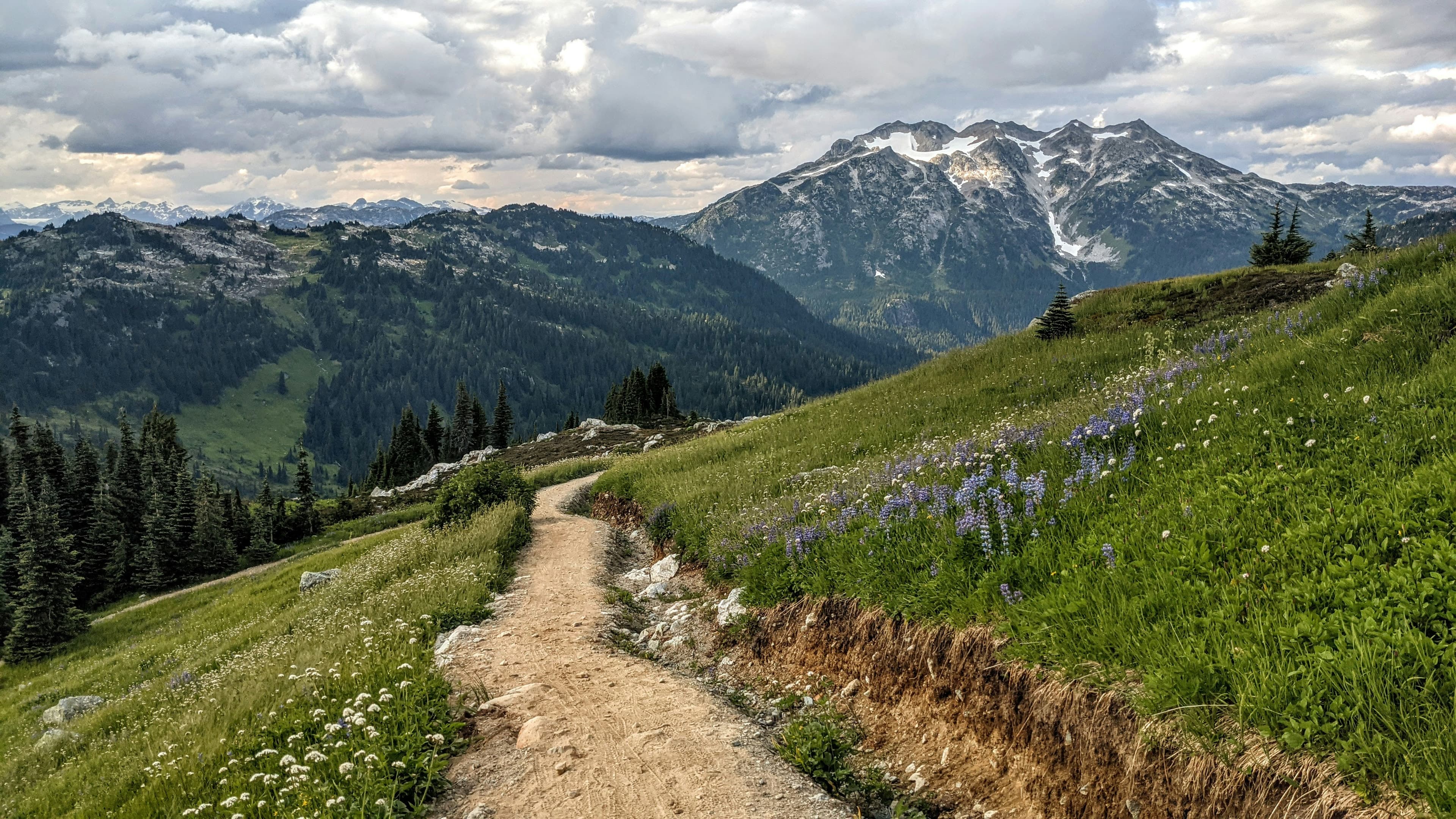
Tour du Mont Blanc
Les Houches → Les Houches · France / Italy / Switzerland
The Alps' most famous loop — 170 km hut-to-hut around the Mont Blanc massif through France, Italy and Switzerland, with 10,000 m of cumulative climb across roughly 11 days.
- Loop distance
- 170 km
- Elevation gain
- 10,000 m
- Duration
- 11 days
- Type
- Loop
What you’re getting into
The Tour du Mont Blanc is the Alps' most famous trek — a 170 km loop around the Mont Blanc massif, crossing the borders of France, Italy and Switzerland and climbing a cumulative 10,000 m across roughly 11 days. Hikers leave from Les Houches in the Chamonix valley and circle the highest mountain in Western Europe counterclockwise, threading seven major passes (Col du Bonhomme, Col de la Croix du Bonhomme, Col de la Seigne, Grand Col Ferret, Col de la Forclaz, Col de Balme, Col du Brévent) and dropping into a different valley — and a different language — every day or two. The full length of the Mont Blanc range stays in view for most of the circuit.
The trail's character shifts dramatically with each border. The French opening days lead through pastoral Haute-Savoie villages and the flowered ridges above Les Contamines before rising into the rocky high country at Col de la Seigne. Italy is bigger and balconier — the Val Veny and Val Ferret balcony paths trace 2,000 m contours opposite the Grandes Jorasses and Aiguille Noire, with Rifugio Bonatti's terrace one of the most photographed lunches in the Alps. Switzerland softens again into the Val Ferret pastures and the Lac de Champex, then the trail climbs a final time over Col de Balme back into France and finishes with the Aiguilles Rouges balcony — the great Mont Blanc-facing ridge above Chamonix — past Lac Blanc and Le Brévent before dropping into Les Houches.
The TMB walks late June to mid-September, when the high refuges are open and the passes are clear of snow. Booking is essential: most refuges open their reservations the previous winter, and popular huts (Bonatti, Elisabetta, La Croix du Bonhomme, Flégère) fill within days. Each night runs €60–90 for a half-board dormitory bed; cheaper bivouacs and gîtes exist in the valley towns but the high refuges are how the trip is meant to be walked. No permits or guides are required — the trail is well waymarked with red-and-white GR stripes — but baggage transfer between huts is widely available and worth it for a multi-week hike. Most walkers travel anticlockwise; clockwise is quieter but means meeting the bulk of trail traffic head-on at every pass.
Where it goes
11 stops connecting Les Houches to Refuge de la Flégère. Click a marker for details.
Standard 11-stage counterclockwise loop
The Cicerone-guidebook split, walked anticlockwise from Les Houches — the prevailing direction, which gets the steepest climb (out of Les Contamines over Col du Bonhomme) done early and keeps the Mont Blanc massif on your right for the whole circuit. Many hikers compress to 10 days by combining stages 7 and 8 (La Fouly to Trient direct).
- 1Les HouchesLes Contamines-Montjoie16 km16.0 km
- 2Les Contamines-MontjoieLes Chapieux18 km34.0 km
- 3Les ChapieuxRifugio Elisabetta Soldini15 km49.0 km
- 4Rifugio Elisabetta SoldiniCourmayeur18 km67.0 km
- 5CourmayeurRifugio Walter Bonatti12 km79.0 km
- 6Rifugio Walter BonattiLa Fouly20 km99.0 km
- 7La FoulyChampex-Lac15 km114.0 km
- 8Champex-LacCol de la Forclaz16 km130.0 km
- 9Col de la ForclazTré-le-Champ13 km143.0 km
- 10Tré-le-ChampRefuge de la Flégère8 km151.0 km
- 11Refuge de la FlégèreLes Houches17 km168.0 km
Detours and weather alternatives
Branches off the main route. Some are scenic, some are safer in bad conditions, some skip a long stretch.
Fenêtre d'Arpette
Champex-LacCol de la Forclaz
The high alternative to stage 8's standard Bovine route from Champex to Trient — a steep 2,665 m pass with direct views over the Trient Glacier. Strenuous and weather-sensitive; many hikers consider it the single best day of the TMB when conditions are clear, but the Bovine route is the safer pick in cloud or rain.
- Distance:
- 16 km
- Elevation gain:
- 1,230 m